
The Number You’re Using to Buy Cannabis Doesn’t Predict Your Experience. This Does.
You’ve bought the same strain twice from the same dispensary and had completely different experiences both times. Or you’ve tried a friend’s cannabis — lower THC than what you normally buy — and it hit better than anything you’d purchased in months. Neither of those experiences was a fluke. They were terpenes. Specifically, the terpene profiles were different, and terpenes are what actually shape your cannabis experience — not the number on the label.
What Terpenes Are — And Why It Matters That Cannabis Has So Many
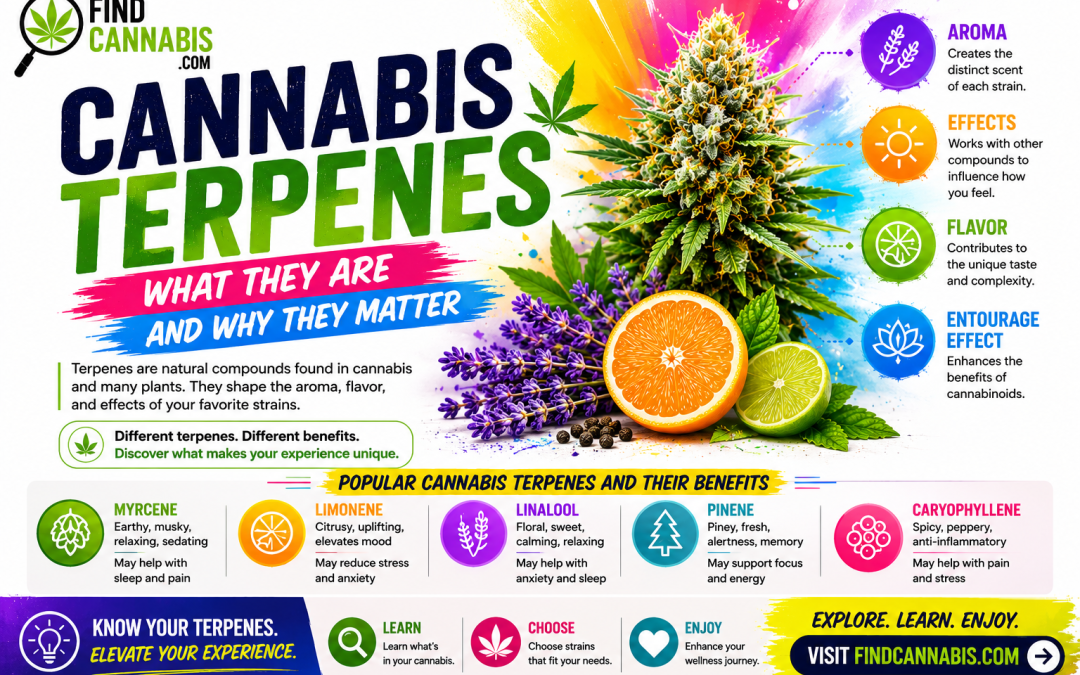
Terpenes are organic compounds produced by plants through the mevalonate biosynthesis pathway. Every plant produces them. Cannabis produces more of them — and more variety — than almost anything else in the botanical world. A single cultivar can contain over 200 distinct terpene compounds, typically accounting for 0.5-5% of flower dry weight, synthesized in the same glandular trichomes that produce THC and CBD.
That last detail matters more than it sounds. Terpenes and cannabinoids develop together, in the same cellular structures, responding to the same growing conditions and harvest timing. A plant that’s been rushed, stressed, or poorly cured loses terpene content in ways that change the product fundamentally — regardless of what the THC test shows. Cultivators who prioritize terpene expression describe curing conditions as equally important as harvest timing, and for precisely this reason.
The pharmacological significance comes from what neurologist Ethan Russo called the “entourage effect” in a landmark 2011 paper in the British Journal of Pharmacology: cannabis compounds work synergistically rather than independently. Terpenes modulate how cannabinoids bind to receptors, influence serotonin and dopamine signaling through their own receptor interactions, and produce sedating, anxiolytic, stimulating, and anti-inflammatory effects independent of THC entirely.
Same THC percentage, different terpene profile: completely different experience. This is the mechanism behind something every experienced cannabis consumer has noticed empirically and never had a satisfying explanation for.
Why the Number on the Label Isn’t What You Think
In 2020, researchers at the University of Colorado published a study in JAMA Psychiatry led by Cinnamon Bidwell that examined 121 real-world cannabis consumers, measured blood cannabinoid levels, and tracked subjective effects. The finding: THC concentration did not predict the acute subjective experience of cannabis — perceived intoxication, impairment, or any other meaningful outcome — better than lower-potency products.
The explanation lies in the entourage effect. THC embedded in a complete terpene matrix behaves differently than THC in isolation. Terpenes modulate CB1 receptor binding, influence neurotransmitter signaling, and produce their own independent pharmacological effects. A cultivar with 22% THCA and a rich terpene profile will consistently produce a more nuanced and effective experience than a 30% THCA cultivar with terpene content below 1%.
Dispensary purchasing data from mature markets reflects this. In California and Colorado, experienced consumers and medical patients have shifted toward terpene-forward products at moderate THC concentrations — a trend that directly contradicts years of industry messaging around potency numbers.
The Terpenes Worth Knowing
Myrcene — Why Indica Strains Feel Like Indica Strains
Earthy, musky, herbal — hops, ripe mango, cloves
Myrcene is the most abundant terpene in commercial cannabis and the primary pharmacological reason Indica-leaning strains feel different from Sativa-leaning ones. It produces sedating, muscle-relaxing effects through activity at GABA-A receptors — the same system targeted by benzodiazepines. A 2002 study in Phytomedicine documented dose-dependent sedation and muscle relaxation in animal models consistent with this mechanism.
Beyond sedation, myrcene may increase blood-brain barrier permeability, accelerating how quickly other cannabinoids reach CNS targets. This is the science behind the mango trick — ripe mangoes contain 0.08-0.54 mg of myrcene per fruit, and consuming them before cannabis may genuinely enhance absorption. Sounds like stoner mythology. The mechanism is pharmacologically plausible.
For sleep and serious pain management — not just relaxation — myrcene-dominant cultivars are the clinically appropriate choice. Medical dispensary staff who work primarily with pain patients describe myrcene content as a primary selection criterion, not a secondary one.
Best for: Sleep, pain relief, deep physical relaxation Common in: Blue Dream, OG Kush, Granddaddy Purple, Mango Kush
Limonene — The Anxiety Antidote
Bright citrus — lemon, orange, lime
Limonene produces mood-elevating, anxiolytic effects through activity at 5-HT1A serotonin receptors — the same receptor targeted by buspirone, a pharmaceutical anti-anxiety medication. A 2012 study in NeuroEndocrinology Letters documented these effects in animal models. More practically, limonene appears to counteract THC-induced anxiety, making limonene-dominant cultivars the most consistent recommendation for consumers who find high-THC strains uncomfortable.
Cannabis wellness practitioners who work with anxiety-prone consumers describe the shift to limonene-forward products as producing more reliably manageable experiences than any other single change in consumption approach. Limonene also enhances mucosal absorption of other terpenes — which helps explain why high-limonene cultivars often feel more complete than their individual components would predict.
Best for: Daytime use, mood elevation, anxiety management, stress relief Common in: Super Lemon Haze, Lemon Skunk, Jack Herer, Durban Poison, Wedding Cake
Beta-Caryophyllene — The Terpene That’s Also a Cannabinoid
Spicy, peppery, woody — black pepper, cloves, cinnamon
Beta-caryophyllene is the only compound in cannabis that is simultaneously a terpene and a cannabinoid — a selective agonist at CB2 receptors that produces anti-inflammatory and analgesic effects without psychoactive consequences. A 2008 study in PNAS by Gertsch and colleagues established this mechanism and documented its anti-inflammatory activity. Subsequent research has examined applications in neuropathic pain, inflammatory bowel conditions, and alcohol use disorder.
The practical harm reduction application: sniffing or chewing black peppercorns when you’ve consumed too much can meaningfully reduce THC-induced anxiety. The CB2 activity modulates the immune-neurological signaling that contributes to cannabis anxiety in sensitive individuals. Cannabis educators who teach harm reduction include this consistently — it requires no preparation and works faster than most people expect.
Best for: Pain, inflammation, anxiety reduction, evening use Common in: Girl Scout Cookies, OG Kush, Chemdawg, Sour Diesel, Bubba Kush
Linalool — The Most Underrated Sleep and Anxiety Terpene
Floral, lavender, slightly spicy
Linalool is why lavender aromatherapy works — it’s the primary active compound responsible for lavender’s anxiolytic properties, and in cannabis it plays an identical pharmacological role. Unlike myrcene’s GABAergic mechanism, linalool modulates glutamate and GABA activity through distinct pathways, producing anxiolytic and sedating effects through a different route. The two terpenes complement each other well because of it.
A 2016 study in Frontiers in Pharmacology documented linalool’s anticonvulsant properties through sodium channel inhibition — a mechanism relevant to its potential synergy with CBD for seizure management. Cannabis-focused neurologists who work with treatment-resistant epilepsy patients describe seeking linalool content alongside CBD for precisely this reason.
For the best terpenes for anxiety without heavy sedation, linalool at moderate concentrations is the most pharmacologically defensible choice. Cannabis-focused therapists consistently describe linalool-dominant strains as their first recommendation for cannabis-naive patients — calming without being overwhelming.
Best for: Anxiety relief, sleep, stress management Common in: Lavender Kush, Amnesia Haze, LA Confidential, Zkittlez, Do-Si-Dos
Alpha-Pinene — The Cognitive Clarity Terpene
Sharp, fresh pine — forest after rain
Alpha-pinene has a property unique among major cannabis terpenes: potential mitigation of THC’s short-term memory impairment. The mechanism involves acetylcholinesterase inhibition — alpha-pinene blocks the enzyme responsible for breaking down acetylcholine, a neurotransmitter critical to memory formation. A 2012 review in the Journal of Natural Medicines documented this activity as comparable to galantamine, used clinically for Alzheimer’s disease.
Whether that effect is strong enough at typical cannabis concentrations to meaningfully offset THC’s memory impairment remains an open research question. It does, however, explain the consistent empirical observation that pinene-dominant strains allow more functional cognitive performance than equivalently potent myrcene-dominant options — a pattern reported by cannabis consumers and athletes using cannabis for recovery who still need to stay sharp.
Best for: Daytime use, focus, cognitive function, outdoor activities Common in: Jack Herer, Blue Dream, Dutch Treat, Snoop’s Dream, Trainwreck
Terpinolene — The One That Converts Skeptics
Fresh, piney, floral, herbal — complex and multi-layered
Terpinolene is the cannabis terpene most reliably described as surprising by people encountering it for the first time. Less commonly dominant than myrcene or limonene, genuinely terpinolene-forward cannabis feels different from most of what’s available in retail markets — complex aromas, notably uplifting effects, and a biphasic dose-response pattern that’s energizing at lower concentrations and mildly sedating at higher ones.
Experienced budtenders describe terpinolene as the terpene that most reliably converts THC-percentage chasers into terpene believers. One well-grown terpinolene-dominant strain at 19% consistently outperforms 28% distillate in meaningful experiential metrics — and the consumer recognition that something different is happening tends to shift purchasing behavior for good.
Best for: Daytime creativity, social use, novel experiences Common in: Jack Herer, Ghost Train Haze, Golden Pineapple, Chernobyl, Dutch Treat
Humulene — The Anti-Munchies Terpene
Earthy, woody, hoppy
A structural isomer of beta-caryophyllene, humulene shares its anti-inflammatory properties while adding one distinctive characteristic: appetite suppression. THC stimulates appetite through CB1 agonism in the hypothalamus; humulene counteracts this through mechanisms under active investigation. Medical dispensary staff describe humulene content as a specific selection criterion for patients managing weight or using cannabis for conditions where appetite stimulation is a side effect rather than a therapeutic goal.
Best for: Pain, inflammation, medical applications where appetite stimulation is unwanted Common in: Headband, Sour Diesel, White Widow, Girl Scout Cookies
Ocimene — The Freshness Indicator
Sweet, herbal, woody with citrus and tropical undertones
Ocimene degrades faster than most cannabis terpenes with heat and oxidation, which means its presence at meaningful concentrations is a reliable signal of careful post-harvest handling. Experienced concentrate producers describe ocimene content as one of the first things they assess in input material — its presence tells them something real about how the plant was processed. In finished products, it contributes uplifting, energizing effects alongside limonene and terpinolene in daytime-oriented profiles.
Best for: Daytime use, mood elevation Common in: Clementine, Golden Goat, Dutch Treat, Strawberry Cough
The Indica/Sativa Framework Is Wrong — And the Industry Knows It
Here’s something most of the cannabis industry knows and few have fully admitted publicly: the Indica/Sativa/Hybrid classification system organizing virtually every dispensary menu in America correlates poorly with actual cannabis effects.
This isn’t a fringe position. It’s the consensus finding of researchers who’ve measured terpene profiles and cannabinoid content across hundreds of labeled cultivars. The genetic and chemical analysis consistently shows that what’s sold as “Indica” can have a terpene profile more associated with energetic Sativa effects, and vice versa. The labels survive because they’re useful marketing shorthand — consumers understand them, staff can explain them quickly, and the alternative requires more consumer education than most retail operations have invested in.
Terpene profile is what the Indica/Sativa framework was always imperfectly trying to describe. High-myrcene, high-linalool cultivars produce the heavy, relaxing effects associated with “Indica.” High-limonene, high-pinene profiles produce the uplifting effects associated with “Sativa.” The labels were approximating a terpene reality the industry didn’t have the vocabulary or testing infrastructure to communicate directly. Now it does — and state markets are gradually moving toward terpene-first categorization as a result.
Protecting What You’re Paying For
Terpenes are thermolabile and volatile. They degrade with heat, evaporate readily, and oxidize with UV exposure. The difference between well-preserved and degraded terpene content is immediately apparent to any experienced consumer.
Storage: Airtight glass — not plastic, which adsorbs terpenes and lets them off-gas — at 55-65°F with 58-62% relative humidity, in UV-protected conditions.
Vaporization temperature: Caryophyllene volatilizes at 266°F; myrcene at 334°F; limonene at 349°F; linalool at 388°F. Vaporizing at 320-350°F preserves a broader terpene spectrum than high-temperature settings, producing more complete entourage effect expression.
Concentrate selection: Live resin and live rosin from fresh or fresh-frozen cannabis preserve terpene profiles more faithfully than any other extraction format. The gap between live rosin and standard BHO from the same input material is measurable in laboratory analysis and perceptible in experience.
Reading the Data That Actually Matters
Any licensed dispensary can provide the Certificate of Analysis for any product on their menu. A complete COA shows:
THCA, THC, and Total THC — potency including the post-decarboxylation calculation that reflects actual available psychoactive content.
Supporting cannabinoids — CBD, CBG, CBN. Elevated CBN indicates age or poor storage — a useful quality signal that most consumers never look for.
Terpene panel — the section that predicts your experience more accurately than anything else on the document. This is where the purchasing decision should actually be made.
Safety panels — pesticide residue, heavy metals, microbials, residual solvents for extracts. The data distinguishing regulated product from everything else.
A Practical Reference Before You Walk In
Identify the primary outcome before you reach the dispensary:
- Best terpenes for sleep → myrcene, linalool
- Best terpenes for anxiety → linalool, caryophyllene, limonene
- Energy and focus → limonene, pinene, terpinolene
- Pain and inflammation → caryophyllene, myrcene, humulene
- Social and creative use → limonene, ocimene, terpinolene
Then ask for the terpene panel. Request the COA. Smell the product before you decide.
The Thing Your Nose Already Knows
Here’s the most counterintuitive — and most actionable — conclusion from the terpene research: your olfactory response to cannabis is pharmacologically valid.
When a strain makes you feel brighter the moment you smell it, that’s a real physiological response — limonene activating serotonin pathways through olfactory-limbic connections before you’ve consumed anything. When a deep earthy jar makes you calmer just from opening it, that’s myrcene engaging GABA pathways through inhalation. The draw you feel toward certain cannabis isn’t preference or habit. It’s your olfactory system detecting terpenes and generating a genuine pharmacological response.
Experienced cultivators and consumers who’ve spent years developing preferences describe smell as their most reliable quality indicator — more reliable than any label metric, more consistent than any strain name. The research supports exactly this.
The most sophisticated cannabis selection tool available costs nothing, requires no app, and doesn’t depend on any label. Stop looking at the number. Start smelling the jar. The consumers who consistently report the best experiences aren’t the ones who found the highest THC — they’re the ones who learned to trust what their nose was already telling them. 🌿👃
Find dispensaries with knowledgeable budtenders who can guide you through terpene profiles at FindCannabis.com.
FAQs
Do terpenes matter more than THC?
Yes. THC alone doesn’t predict cannabis effects. Terpenes significantly influence how cannabis feels, including relaxation, energy, and anxiety response.
What are terpenes in cannabis?
Terpenes are aromatic compounds that affect smell, flavor, and how cannabis interacts with the brain and body.
Why does the same strain feel different sometimes?
Because terpene profiles, growing conditions, and curing methods vary, even within the same strain name.
Which terpenes are best for sleep or anxiety?
Myrcene and linalool are commonly associated with sleep, while limonene and caryophyllene are often used for stress and anxiety relief.