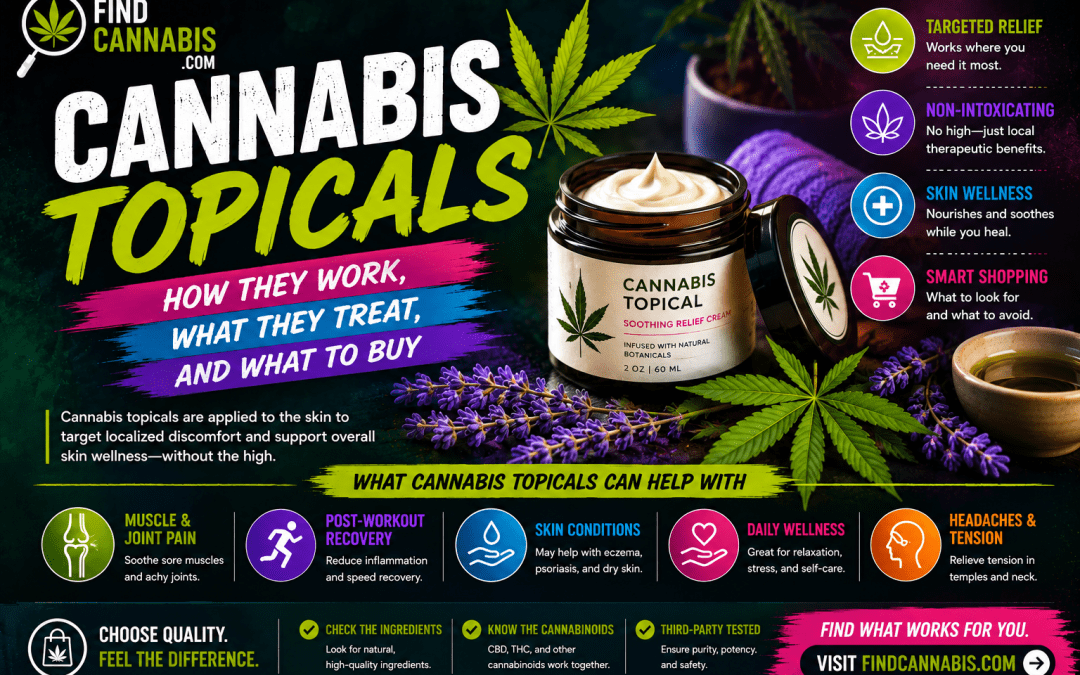
Your Skin Has Its Own Endocannabinoid System. Cannabis Topicals Are Built Around That.
Your skin has its own endocannabinoid system. Not a trace of one — a functionally significant network of CB1 and CB2 receptors distributed through the epidermis and dermis, regulating inflammation, pain signaling, immune response, and sebum production. Cannabis topicals don’t work by pushing cannabinoids toward your brain. They work by activating a receptor system that already exists in your skin, doing exactly the job you’re asking it to do. That’s not marketing language. It’s documented receptor pharmacology.
Why Formulation Matters More Than Milligrams
Before getting into specific products, understanding how different formulations penetrate the skin determines what conditions they’re suited for — and explains why comparing products purely by CBD milligram count misses the point.
The stratum corneum — the outermost layer of the epidermis — is hydrophobic and highly selective. Different formulations penetrate to different depths, and those depths determine the application.
Water-based creams and lotions reach the upper epidermis. Effective for surface skin conditions — eczema, psoriasis, acne, post-procedure inflammation — and mild pain applications. Fast absorption, but limited depth.
Oil and wax-based formulations (balms, salves) penetrate more deeply into the dermis. Cannabinoids are lipophilic — fat-soluble — and oil-based carriers are better matched to their chemistry. The right choice for deep tissue applications: joint pain, deep muscle soreness, subcutaneous inflammation.
Transdermal patches use penetration enhancers — ethanol, propylene glycol, or terpene-based compounds — to disrupt the stratum corneum barrier entirely and push cannabinoids into the dermal vasculature. The resulting pharmacokinetics are distinct from any other consumption method: 30-60 minute onset, sustained steady-state plasma concentration over 8-12 hours, and bypassing of first-pass hepatic metabolism. Transdermal THC patches produce systemic psychoactivity and drug-test-detectable metabolites. Categorically different from standard topicals.
The practical implication is straightforward: a water-based cream for eczema, a beeswax balm for deep joint pain, a transdermal patch for chronic pain requiring overnight coverage. These aren’t interchangeable, and treating them as such is the most common purchasing mistake in this category.
What the Research Shows
Joint pain and arthritis
CB2 receptors on synovial immune cells suppress the inflammatory cytokine signaling that drives arthritic joint destruction. A 2016 study in the European Journal of Pain found that topical CBD application reduced joint swelling, limb posture scores indicating pain, and synovial membrane thickening in an arthritis model. Cannabis dispensary staff in mature legal markets consistently describe topicals as among their most frequently recommended products for joint pain patients who want to avoid systemic effects — a consumer behavior pattern consistent with the pharmacological rationale.
Apply morning and evening to affected joints, massage in circular motions for 2-3 minutes, and maintain consistency. Occasional high-dose application is less effective than regular scheduled use.
Neuropathic pain
TRPV1 receptors — involved in neuropathic pain signaling — are expressed in skin nerve fibers and respond to cannabinoids. A 2019 study in Pain Medicine found significant improvements across multiple pain metrics in patients with peripheral neuropathy using topical CBD: reduced intense pain, sharp pain, cold and itchy sensations, and improved quality of life. Peripheral neuropathy often responds poorly to pharmaceutical approaches, and the topical mechanism is pharmacologically sound — which makes this one of the more underreported applications in the category.
Acne
CBD’s effects on acne aren’t general anti-inflammatory vagueness. A 2014 Journal of Clinical Investigation study by Oláh and colleagues documented CBD’s lipostatic effects in human sebocytes — CBD directly suppresses lipid synthesis in sebaceous gland cells, reducing sebum overproduction at a cellular level. Anti-inflammatory effects in sebocytes were documented in the same study, addressing both drivers of acne simultaneously. This is targeted molecular pharmacology.
Muscle soreness and post-training recovery
CB2 receptor-mediated cytokine suppression reduces the local inflammatory response driving post-exercise soreness. Most effective formulations add menthol for immediate TRPV1-mediated cooling analgesia alongside the cannabinoid activity — two pharmacologically distinct mechanisms working simultaneously on the same problem. Apply immediately post-training, use more volume than feels necessary, and massage in thoroughly.
Headaches and migraines
The honest assessment: mechanistically less established than the joint, nerve, and muscle applications. CB1 receptors are present in scalp nerve fibers and blood vessels, providing a plausible mechanism for temple and neck application. Consumer reports are consistent enough to note. The clinical evidence base is weaker here. Worth trying given low risk; expectations should be calibrated accordingly.
The Products Worth Buying
Charlotte’s Web CBD Cream (~$45-55 | 750mg | charlottesweb.com)
Charlotte’s Web established quality standards in the CBD industry before most competitors existed, and their testing and sourcing practices remain rigorous. The recovery cream’s combination of full-spectrum CBD with menthol and capsaicin addresses pain through complementary mechanisms — surface cooling and deeper warming — rather than relying on cannabinoids alone. COA accessibility is standard. A reliable starting point for anyone new to the category.
Best for: General muscle soreness, post-workout recovery, everyday pain management
Lazarus Naturals CBD Balm (1000mg | ~$25-35 | lazarusnaturals.com)
The beeswax-based formulation is pharmacologically significant — wax carriers provide longer skin residence time than cream formulations, meaning extended receptor exposure at the application site. At 1000mg full-spectrum CBD and prices that make daily use economically sustainable for chronic pain patients, this occupies a market position nothing else quite matches. The veteran and low-income discount program (50% off with documentation) addresses an access gap the rest of the industry largely ignores.
Best for: Chronic pain requiring frequent reapplication, value-focused consumers, veteran population
cbdMD Recover CBD Freeze Roll-On (1500mg | ~$30-40 | cbdmd.com)
The roll-on format solves a practical problem for athletic populations: cream on your hands mid-session. At 1500mg, this is among the highest concentrations in the roll-on subcategory. Menthol delivers TRPV1-mediated cooling analgesia — a separate pharmacological mechanism from the CB receptor activity — providing immediate relief while the cannabinoids address the underlying inflammation.
Best for: Post-training recovery, targeted application, on-the-go use
Mary’s Medicinals Transdermal Patch (~$10-15/patch | marysmedicinals.com)
Mary’s Medicinals pioneered cannabis transdermal delivery and has refined the technology across years of legal market iteration. The pharmacokinetic profile is what makes this clinically relevant: sustained plasma concentration over 8-12 hours without peak-and-trough variability, and first-pass hepatic metabolism bypass unavailable to oral formulations. For chronic pain patients who experience breakthrough pain as plasma cannabinoid levels drop overnight, this addresses the pharmacokinetic problem directly.
THC patches produce systemic psychoactivity and drug-test-detectable metabolites. This is categorically different from standard topicals — worth stating plainly.
Best for: Sustained overnight pain coverage, consistent plasma levels throughout the day
Kush Queen CBD Bath Bomb (~$12-15/bomb | 25-100mg CBD | kushqueen.shop)
Warm water increases skin permeability through stratum corneum hydration and dilates superficial blood vessels, creating conditions for more thorough cannabinoid-skin receptor interaction than most topical applications. The Epsom salt component adds independent benefit — transdermal magnesium absorption is a documented mechanism for muscle relaxation, making the cannabinoid and magnesium effects genuinely synergistic rather than merely pleasant.
Best for: Full-body post-training recovery, systemic relaxation, conditions where localized application isn’t practical
Apothecanna Everyday Pain Relief Cream (~$30-50 | apothecanna.com)
For legal state consumers wanting THC topicals, Apothecanna’s multi-ingredient formulation is pharmacologically rational: THC and CBD for CB receptor-mediated analgesia, arnica for NF-κB pathway anti-inflammatory activity, eucalyptus (containing 1,8-cineole) for additional analgesic effects through separate mechanisms. Multiple complementary pathways, clean ingredient list, natural scent.
Best for: Legal state consumers, significant localized pain, natural ingredient preference
The Contrarian Case — Technique Beats Product Selection
Here’s something the cannabis topicals industry doesn’t have much incentive to say loudly: application technique likely matters as much as which product you buy. Possibly more.
A $25 Lazarus Naturals balm applied correctly — generous volume, 3 minutes of active massage, warm towel for 10-15 minutes afterward, reapplied every 4-6 hours — will outperform a $60 premium cream dabbed on and abandoned. Research on topical drug delivery consistently shows that massage enhances penetration of lipophilic compounds through mechanical disruption of the stratum corneum and increased local blood flow. Heat increases skin permeability through stratum corneum hydration. These are documented mechanisms.
Most consumer-facing guidance talks about products. Almost none talks about technique. The result: consumers buy based on milligram count and brand recognition, apply carelessly, get partial results, and either conclude topicals don’t work or spend more money when the real variable was how they used what they already had.
The technique protocol that actually reflects the research:
Volume: Apply more than feels necessary, particularly for balms. Clinical topical CBD studies use substantially higher application volumes than typical consumer use.
Massage: 2-3 minutes of active pressure — not rubbing until absorbed, but actual massage improving penetration and local blood flow.
Heat: Warm towel over the site for 10-15 minutes post-application increases stratum corneum permeability and improves local vascular distribution of absorbed cannabinoids.
Frequency: Every 4-6 hours for conditions requiring consistent management. Topical cannabinoids clear from local receptor sites faster than systemic methods maintain plasma levels.
Clean skin: Post-shower application absorbs more effectively than application over sweat or environmental contaminants.
Combination with oral CBD: For chronic conditions, topical handles local receptor-mediated effects; oral CBD addresses centrally mediated pain amplification and systemic inflammation. The combination is more complete than either alone.
Making Your Own
Home topical production is popular in legal states and more approachable than most people expect. Understanding the formulation science above makes for better results.
Basic Cannabis Salve
- 1 cup coconut oil (lipophilic carrier for dermis-level penetration)
- 1/4 cup beeswax pastilles (extends skin residence time vs. oil-only formulations)
- 1-3g decarboxylated cannabis
- Optional: 20-30 drops lavender or peppermint essential oil
Decarboxylate cannabis at 220°F (104°C) for 45 minutes. Combine with coconut oil in a double boiler at 160-180°F for 2-3 hours. Strain through cheesecloth. Melt beeswax into infused oil. Add essential oils. Pour into containers and let set.
The beeswax isn’t arbitrary — it provides longer skin residence time than oil-only preparations, which means more sustained receptor exposure at the application site.
Drug Testing — The Precise Answers
Standard topicals: The stratum corneum barrier prevents meaningful systemic cannabinoid absorption. THC-COOH — the primary metabolite detected on urine drug tests — is not produced in detectable quantities. A 2017 Forensic Science International controlled study confirmed this under high-concentration topical THC application. For standard topical users, drug test interference is not a realistic concern.
Transdermal patches: Systemic absorption is the designed mechanism. THC-COOH will be produced. Detection window depends on dose, frequency, individual metabolism, and body composition. Treat exactly as you would any other THC consumption method.
CBD-only transdermal products: Full-spectrum CBD transdermal products containing trace THC could theoretically produce detectable metabolites at high frequency and dose — transdermal delivery bypasses first-pass metabolism in ways that increase this risk marginally compared to oral CBD. For individuals with strict testing requirements, CBD isolate transdermal products are the conservative choice.
Where the Category Is Heading
The cannabis topicals category is about to get significantly more sophisticated — and the reason is that pharmaceutical companies have noticed what the legal cannabis market figured out empirically.
The skin’s endocannabinoid system is a pharmacologically significant target. Topical delivery avoids the regulatory and psychoactivity complications of systemic cannabinoid administration. The clinical evidence base is developing rapidly enough to support medical applications. These are conditions that attract serious research investment, and that investment is arriving.
The next generation of cannabis topicals won’t look like what’s currently on dispensary shelves. Nanoencapsulation technology that dramatically improves cannabinoid penetration depth. Formulations designed around specific terpene-cannabinoid ratios for targeted receptor profiles. Transdermal delivery systems refined to pharmaceutical-grade pharmacokinetic precision.
What’s available in 2026 is already more effective than most consumers realize — primarily because application technique is underutilized and formulation science is underexplained. What’s coming is considerably more targeted than that. The receptor system that makes topicals work was always going to attract serious attention. It has it now. 🌿🖐️
Find dispensaries with cannabis topicals near you at FindCannabis.com.
FAQs
Do cannabis topicals get you high?
Standard cannabis topicals generally do not produce psychoactive effects because cannabinoids do not significantly enter the bloodstream through normal skin absorption.
How do cannabis topicals work?
Cannabis topicals interact with CB1 and CB2 receptors in the skin’s endocannabinoid system to help regulate inflammation, pain signaling, immune activity, and sebum production.
What conditions are cannabis topicals commonly used for?
Cannabis topicals are commonly used for joint pain, arthritis, muscle soreness, neuropathic pain, inflammation, acne, and post-workout recovery.
What is the difference between a topical and a transdermal cannabis patch?
Standard topicals primarily work locally in the skin and underlying tissue, while transdermal patches are designed to deliver cannabinoids into the bloodstream for systemic effects.